What Are AI Agents in Crypto Autonomous Trading and Management
The world of cryptocurrency is changing fast. Now, self-learning software entities are leading the way. These AI agents are designed to do automated trading, study market trends, and make better decisions as they learn.
They work on their own in digital asset markets. They handle buying, selling, and managing assets in DeFi systems. This is all done without the influence of human feelings or tiredness.
Unlike simple trading bots, these advanced agents use machine learning. They keep improving their strategies with new data. This makes them more skilled intelligent co-traders.
Thanks to their ability to adapt and use data, they are changing finance. They are not just tools but complex systems that are changing how we deal with the ups and downs of markets.
The Evolution of Autonomous Systems in Cryptocurrency Markets
Cryptocurrency’s 24/7 global nature made autonomous trading systems essential. Human traders can’t watch markets all the time. Early bots often failed under the market’s volatility.
This led to a big technological leap forward.
It all started with simple automated scripts. These were followed by more advanced bots that could handle arbitrage or stop-loss commands. Then, algorithmic trading systems came along, using stats to make decisions.
- Increasing Complexity: More assets and exchanges made manual management hard.
- Extreme Volatility: Crypto’s price swings require fast reactions, beyond human speed.
- Data Explosion: Lots of data on-chain and elsewhere helped create smarter models.
Recently, AI in crypto saw a huge leap. In the last quarter of 2024, AI agents’ value soared from $4.8 billion to $15.5 billion. This shows how fast these systems are being adopted.
The future looks bright. Experts predict the AI trading platform market will hit $69.95 billion by 2034. It’s set to grow at over 20% annually. This shows a big change in how digital asset markets are run.
Related Posts:
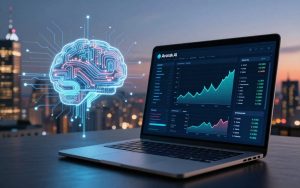


The rise of autonomous systems is the market’s answer to manual limits. What began as a convenience tool is now key for managing a complex, data-rich, and always-on trading world.
What Are AI Agents in Crypto? Defining the Core Concept
At the heart of modern cryptocurrency markets lies a new class of digital entity: the AI agent. These are not just simple automated scripts. They are autonomous software programs designed to understand complex market environments. They make their own decisions and take actions to reach their financial goals.
They mark a shift from human-led trading to a system where intelligence is built into the market itself.
Core Components: Perception, Processing, and Action
Every crypto AI agent works in a continuous cycle. This cycle is what makes it operational and strategic.
Perception is the agent’s way of seeing the world. It involves constantly taking in vast amounts of data. This data isn’t just about prices. It includes on-chain transaction data, social media sentiment, and global economic indicators.
This real-time market analysis is the base for all its decisions.
Processing is where data becomes insight. Advanced algorithms and machine learning models analyse the data. They find patterns and signals that humans can’t see. This phase assesses risk and decides on a strategy.
Action is the outcome. The agent acts on its strategy. This could mean buying or selling, interacting with smart contracts, or rebalancing a portfolio. Each action changes the environment, starting a new cycle.
Distinguishing Characteristics: Autonomy, Learning, and Proactivity
What makes an AI agent different from basic automation is its intelligent traits.
Full Autonomy is key. Once set with a goal, the agent works alone. It handles everything from data analysis to trade settlement. This removes emotional bias and allows for constant market engagement.
Continuous Learning is another important feature. These agents get better over time. They update their machine learning models based on new data and past actions. This means they can adapt to changing markets.
Proactive Opportunity-Seeking is their advanced behaviour. Unlike simple bots, AI agents actively look for chances. They simulate scenarios and test strategies. As one paper notes,
“The advanced agent doesn’t just wait for a signal; it constructs the market conditions for its own success.”
This mix of self-directed operation, adaptive intelligence, and forward-looking action makes AI agents a game-changer in crypto management.
How AI Crypto Trading Agents Work: A Technical Overview
AI crypto trading agents work in a three-stage process. This process turns vast amounts of data into clear actions. It’s the heart of algorithmic trading today. Knowing this helps us see how these agents make smart decisions.
Data Acquisition and Real-Time Market Analysis
Data is the start of everything. AI agents grab info from many places fast. They look at blockchain data, exchange APIs, financial news, and social media.
They handle lots of data at once. This includes price changes, order book details, and news. This gives a full picture of the market.
NLP helps them understand news and social media. It turns text into numbers. This gives a detailed view of the market.
The Decision-Making Engine: Machine Learning Models
After getting data, AI agents make sense of it. They use machine learning to spot patterns and predict trends. This helps them make smart trading plans.
These models get better over time. They learn from data to find the best trades. This is something humans can’t do as well.
For more on these smart systems, check out our analysis on AI agents in crypto trading.
Common Algorithmic Approaches: Reinforcement Learning and Neural Networks
Two main ways AI learns are Reinforcement Learning and Neural Networks. Each is good for different trading needs.
Reinforcement Learning (RL) agents learn by doing. They try things, see if they work, and adjust. This is great for changing strategies.
Neural Networks are good at finding complex patterns. They can spot connections in data that others miss. This helps predict the market.
| Approach | Primary Goal | Learning Method | Typical Use Case in Crypto |
|---|---|---|---|
| Reinforcement Learning | Strategy optimisation for maximum profit | Learns from rewards/penalties via interaction | Dynamic portfolio allocation; adaptive market-making |
| Neural Networks | Pattern recognition and price prediction | Learns from labelled historical datasets | Trend forecasting; volatility prediction; anomaly detection |
| Hybrid Models | Combine prediction with strategic execution | Integrates both supervised and reinforcement learning | High-frequency algorithmic trading systems with built-in risk management |
Trade Execution and Continuous Portfolio Management
Once a decision is made, the agent acts fast. It finds the best price for trades. This saves money.
Managing a portfolio is ongoing. AI agents keep an eye on how well things are doing. They adjust to keep risk in check or to take advantage of new insights.
This system runs all the time. It’s a loop of data, analysis, action, and review. It’s how AI manages crypto on its own.
Primary Types of AI Agents in Crypto Trading and Management
Crypto’s tools for managing assets are not all the same. They are advanced programs designed for specific tasks like arbitrage and rebalancing portfolios. The world of crypto thrives on specialisation, with different AI agents excelling in their roles.
It’s important to understand these main types to see how autonomous agents affect the market and personal strategies. They range from making markets liquid to predicting trends and managing personal assets.
Market-Making and Arbitrage Agents
These agents focus on making markets efficient and finding small price differences. Their work is key to a smooth trading environment.
Market-making agents always offer to buy and sell at the current price. They make money from the difference between the bid and ask prices, earning small amounts on many trades. Dynamic spread adjustments help them adapt to market changes, widening spreads when it’s risky.
Arbitrage agents, on the other hand, look at many exchanges at once. They find quick price differences for the same asset. Then, they buy low and sell high across exchanges to make a profit.
Groups like the ai16z DAO show this complexity. They use agents for “arbitrage execution across multiple exchanges” and “market making with dynamic spread adjustments” as part of their automated strategies.

Trend-Following and Predictive Analytics Agents
This group acts like a never-sleeping technical analyst. They look for market trends using huge datasets that humans can’t process.
Trend-following models use tools like moving averages and momentum indicators. They enter trades when a trend is clear and exit when it looks like it’s reversing. Their aim is to catch a big part of a market move, whether it’s up or down.
Predictive analytics agents look at more data. They consider news, social media, and on-chain metrics like transaction flows. By combining this info, they try to forecast price movements before they happen.
These agents turn chaotic market data into clear trading signals. They take the guesswork out of timing the market.
Portfolio Management and Automated Rebalancing Agents
At the heart of crypto portfolio management are these autonomous custodians. Their job is not to win every trade but to keep a target asset mix and aim for long-term, risk-adjusted returns.
As noted in practice, these DeFi AI agents “monitor the market in real-time and execute trades quickly. They adjust your portfolio based on risk levels and changing market conditions.” This constant watch is their main task.
If a volatile asset grows too big in a portfolio, the agent sells some to rebalance. It then invests the money in underweighted assets. This disciplined approach helps investors stick to a buy-low, sell-high strategy.
The real value of finance automation is not replacing human judgement but sticking to a rational strategy, even when the market is noisy.
Their most advanced uses involve working directly with DeFi protocols. They can move assets between pools to find the best yield. They manage collateral ratios in lending platforms and carry out complex strategies in one transaction.
| Agent Type | Primary Function | Key Mechanism | Typical Interaction |
|---|---|---|---|
| Market-Making & Arbitrage | Provide liquidity / exploit price differences | High-frequency order placement & multi-exchange arbitrage execution | Centralised & Decentralised Exchanges (DEXs) |
| Trend-Following & Predictive | Identify and act on market momentum | Technical indicator analysis & sentiment scoring of news/social data | Market data feeds & trading APIs |
| Portfolio Management & Rebalancing | Maintain target allocation & optimise risk/return | Automated trade execution based on deviation from set portfolio weights | Personal wallets, exchange accounts, & DeFi smart contracts |
Together, these special agents make up a complete system for finance on its own. They ensure market liquidity and execute custom crypto portfolio management plans. Each type plays a unique role in making digital asset markets more efficient and accessible.
The Advantages of Utilising AI Agents for Crypto Trading
The move to use AI in crypto trading is not just a trend. It’s a smart move to fix old problems in trading. AI agents give a big edge by changing how we trade and keep trading. They solve big human problems, bringing a new level of control and insight.
Emotionless Execution and Uninterrupted Market Operation
Trading mistakes often come from our emotions. Fear, greed, and FOMO can lead to bad choices. AI agents remove these problems. They stick to a plan, no matter what the market does.
This means they trade consistently, without getting tired or biased. Also, crypto markets never stop. An AI agent works 24/7, finding chances everywhere and anytime. This is key because big price changes can happen at any time.
These systems can handle a lot at once. One agent can watch many coins and exchanges. This lets them use complex strategies that humans can’t do alone.
Superior Processing Speed and Multi-Factor Analysis
AI agents are way faster than humans. They can make trades in milliseconds. This is key for quick strategies like market-making.
They also do multi-factor analysis better. They mix lots of data to make smart trading signals. This includes price, volume, and even social media and economic news.
Handling all this data fast is something humans can’t do. AI finds hidden connections in the data. This leads to smarter trading decisions. New tools like no-code AI workflow make this advanced analysis easy for more people.
These benefits add up to a powerful tool. They help us trade better by avoiding human mistakes and using AI’s strengths.
Risks and Challenges Associated with AI Trading Agents
The journey to fully automated crypto management is filled with obstacles. These include model flaws, market irregularities, and legal grey areas. Recognising these risks of AI trading is key to creating strong systems. To succeed, one must overcome three main challenges: technical issues with the agent, market vulnerabilities, and changing laws.
Technical and Model Risks: Overfitting and Systemic Errors
An AI’s success depends on its training data. A major problem is overfitting, where a model is too focused on past data. It might do well in tests but fail in real trading. This is because it relies too much on old data, missing new, unexpected events.
Another big worry is AI hallucinations. This is when a model gives false or misleading signals. In trading, acting on these can lead to big, quick losses. This shows that an AI’s decisions, though based on data, are not always right.
When many agents, using similar models, act together, they can create problems. They might make market moves bigger and more unstable. A sell signal from one agent can start a chain reaction, leading to a big sell-off. This can make the market even more unstable.
Market Vulnerabilities and Evolving Regulatory Landscapes
Crypto markets are known for being volatile and open to manipulation. AI agents, which look for patterns, can be tricked by bad actors. Tactics like wash trading and spoofing are used to create fake signals that AI might think are real.
Pump and dump schemes are another threat. An AI might buy into a fake asset, only to lose money when it crashes. Also, the thin liquidity in some crypto pairs makes them prone to flash crashes. An agent’s automated selling can make a sudden, deep price drop worse.
| Vulnerability Type | How It Exploits AI Agents | Potential Impact |
|---|---|---|
| Wash Trading | Creates artificial volume and price action, tricking trend-based algorithms. | Agent enters trades based on false liquidity, leading to poor execution and losses. |
| Spoofing / Layering | Places large, fake orders to suggest support/resistance levels that don’t exist. | Agent’s price prediction models are corrupted, causing mis-timed entries or exits. |
| Pump and Dump Schemes | Generates sudden, coordinated buying pressure (the “pump”). | Momentum-following agents buy at the peak, suffering losses during the inevitable “dump”. |
| Flash Crash Events | Triggers a cascade of stop-losses and liquidations in illiquid markets. | Agents may execute panic sells at vastly depressed prices, realising significant losses. |
On top of these market risks, there’s a lot of regulatory uncertainty. Governments are figuring out how to handle AI trading. Questions about who’s liable for an AI’s actions, KYC rules, and legal status of AI decisions are not clear. This uncertainty might slow down adoption as companies wait for clearer rules.
Lastly, AI security is critical. The agents and their systems are targets for hackers. A breach could lead to theft, manipulation, or a complete shutdown. Strong security, constant monitoring, and fail-safes are essential to manage the risks of AI trading.
Real-World Applications and Use Cases
AI agents are now a real tool in finance, not just a dream. They solve complex problems quickly and accurately. This section looks at two main areas where AI is making a big difference.
Institutional Adoption: Hedge Funds and Quantitative Trading Firms
Big financial groups were quick to use AI for trading. Now, many hedge funds and trading firms rely on AI. They use AI for fast trading and finding small market gaps.
Many AI agents are being made and used. For example, over 11,000 agents have been launched on Virtuals Protocol. This shows a growing market where AI is a key tool. AI’s success helps funds grow and investors earn more.
Institutional AI works in private systems. It looks at huge amounts of data, more than what’s public. Its decisions are based on advanced machine learning. It works smoothly with exchanges and safekeeping solutions, ensuring emotionless execution and optimal trade timing.
Decentralised Finance (DeFi): Yield Optimisers and Automated Vaults
DeFi is where AI meets blockchain’s smart money. This mix has created a new area: DefAI (Decentralised Finance AI). In DefAI, AI agents manage strategies directly on blockchain through smart contracts.
These agents help with new yield optimisers and automated vaults. They find the best returns for DeFi protocols. With AI, you can manage pools, adjust rates, or find yield farming automatically. This means no more constant checking and adjusting.
A big step in DeFi is AI agent tokenisation. Projects like ai16z DAO let people invest in AI strategies. This makes advanced strategies available to more people, not just big groups.
The table below shows how AI is used differently in these two big areas:
| Feature | Institutional & Quantitative Finance | Decentralised Finance (DefAI) |
|---|---|---|
| Primary Focus | Market-making, arbitrage, alpha generation | Yield optimisation, automated vault management, liquidity provisioning |
| Key Mechanism | Proprietary models, private data, direct API integration | On-chain smart contracts, transparent logic, community governance |
| Access & Governance | Closed, restricted to fund investors | Open, often via AI agent tokenisation and DAO structures |
| Example Projects/Platforms | Proprietary firm strategies, Virtuals Protocol (for agent creation) | ai16z DAO, automated yield vaults (e.g., Yearn Finance strategies), Virtuals Protocol agents |
AI’s use shows its flexibility. In institutions, it boosts traditional finance. In DeFi, it creates new, self-running financial tools. Both use AI’s core abilities but in very different ways.
AI Agents Versus Human Traders: A Comparative Analysis
In the world of cryptocurrency, a big debate exists. It’s between AI agents and human traders. This debate is key for anyone interested in the future of trading.
The main issue is a trade-off. It’s between the power of computers and the wisdom of humans. The table below shows the main differences.
| Attribute | AI Trading Agents | Human Traders |
|---|---|---|
| Speed & Availability | Work in milliseconds, never get tired, and work all the time. | Can’t work as fast, need breaks, and are affected by emotions. |
| Data Processing | Can handle lots of data at once (like prices and social feelings). | Good at focusing on a few things but can get overwhelmed. |
| Decision Basis | Make decisions based on numbers and rules; no emotions. | Use a mix of analysis, research, and instinct. |
| Adaptability | Learn from new data but struggle with new, unexpected events. | Can use understanding and creativity for new situations. |
| Risk Profile | At risk of making mistakes like overfitting; can affect the market. | Can be swayed by emotions like fear and greed. |
AI systems can spot chances that humans miss, like quick profit opportunities. But, this shows a big human advantage. Humans can understand the reasons behind market changes, like news or politics, that AI might not get right away.
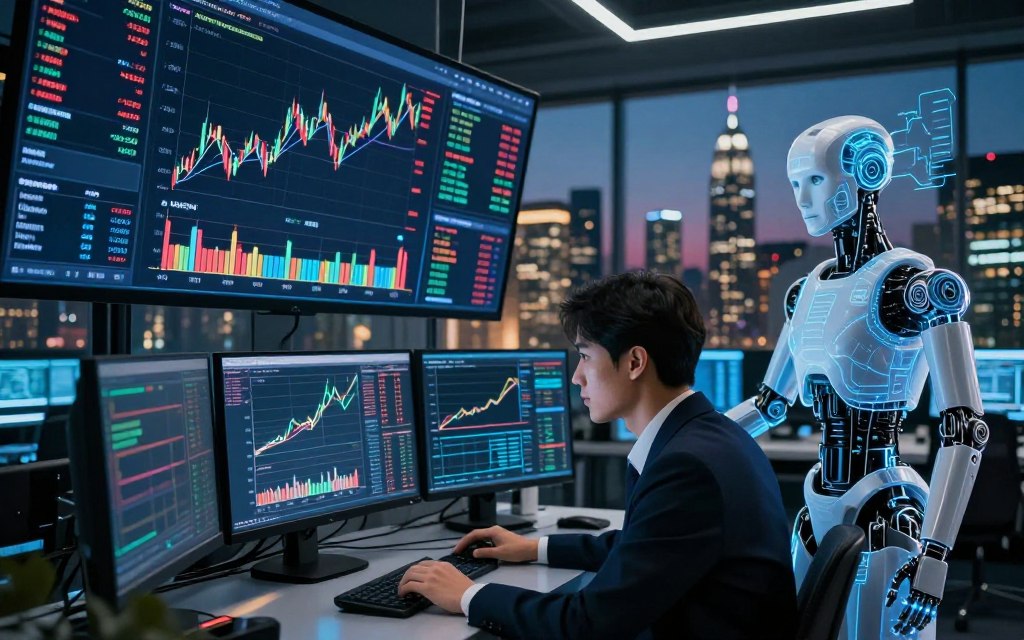
This shows that the best approach is a mix of both. Humans set the big goals, rules, and how much risk to take. The AI then does the detailed work, like crunching numbers and making small changes.
This change is changing how markets work. When many AI systems work together, they can create a system that’s hard to control.
“When bots interact and react to one another, market movements may become detached from real investor sentiment, creating a system where algorithms, not humans, dictate price action.”
This is both good and bad. It can make markets more liquid and efficient but also more volatile. Humans will focus on setting the big picture and training AI, not just doing the work.
In the end, the future of trading will be a mix of both. Humans will keep their creative and ethical skills. But, they will work with AI systems that can do things humans can’t. Understanding what each can do is key to making trading better.
The Future of AI Agents in Autonomous Crypto Management
The future of managing crypto is changing with new AI agents. We’re moving from simple trading bots to a complex network of smart software. This change will change how we create, manage, and share value on blockchains.
Three big trends will shape this new era. First, AI agents will work together in networks, sharing information and making deals. Second, they will handle most financial tasks directly on blockchains. Third, new agent-led economies will start in areas like gaming and digital entertainment.
In this future, agent-to-agent interactions will be common. A portfolio manager might talk to a market maker for better deals. A yield farmer could team up with a risk checker from another protocol. This creates a 24/7 financial network that works on its own.
Cross-chain interoperability is key to this vision. Future AI agents will work across different blockchains. They will move assets and data easily, finding opportunities and managing risks across the crypto world.
Creating these powerful tools will be easier soon. AI agent studio platforms will let people build and use their own agents. You won’t need a PhD in machine learning to do it. This will bring more diversity and creativity to the ecosystem.
AI agents will also help with governance and following rules. They will do predictive regulatory analysis, helping projects stay legal. They will also manage DAOs, making decisions and handling money based on real-time data.
The gaming and virtual worlds are another exciting area. AI agents could manage guilds, trade virtual items, or provide liquidity for in-game currencies. This will create dynamic, player-driven economies.
| Trend | Core Function | Key Technology | Potential Impact |
|---|---|---|---|
| Collaborative Agent Ecosystems | Enable AI agents to negotiate, trade, and cooperate autonomously. | Secure agent-to-agent communication protocols. | Creation of self-optimising, decentralised financial networks. |
| Cross-Chain Operations | Manage assets and execute strategies across multiple blockchains. | Advanced interoperability bridges and atomic swaps. | Unlocks unified liquidity and global market access. |
| Democratised Creation (AI Agent Studio) | Allow non-experts to build and deploy custom crypto agents. | Low-code/no-code platforms with modular components. | Explosion in agent diversity and innovative use cases. |
| Predictive Compliance & DAO Management | Automate regulatory monitoring and decentralised organisation governance. | Natural Language Processing for legal texts, on-chain analytics. | Reduced operational risk and more efficient decentralised governance. |
The main theme is a shift to an agentic crypto world. The future of AI in crypto is not just about faster trades. It’s about creating a smart layer that manages digital assets and economies with little human help. The era of autonomous crypto management, led by advanced AI agents, is starting.
Conclusion
AI agents in crypto mark a big change in managing digital assets. They go beyond simple automation. These systems use advanced machine learning to trade on their own.
They bring big benefits to crypto trading. Agents trade with precision and look at huge amounts of data quickly. This skill is key for dealing with fast-changing markets.
More and more groups are using these agents. From big firms to DeFi optimisers, they use them for smart trading and keeping portfolios in check.
But, there are risks like model overfitting or errors. Understanding AI agents in crypto is key for making smart plans.
The future of crypto is all about being smart and independent. Getting to know this tech is vital for those serious about the future of finance.
FAQ
What exactly is an AI agent in the context of cryptocurrency?
An AI agent in cryptocurrency is a self-learning software. It makes trades, manages investments, and analyses data with little human help. Unlike simple bots, these agents use advanced learning to adapt and act smartly in the crypto market.
How have AI trading systems evolved from basic bots?
AI trading systems have grown from simple scripts to smart agents. This change is due to the market’s complexity and the rise of data. Key steps include using reinforcement learning and neural networks, leading to faster growth in late 2024.
What are the core components that make an AI agent function?
An AI agent works through three main parts: Perception (getting data from exchanges and news), Processing (using algorithms to decide), and Action (making trades through APIs or smart contracts).
What distinguishes an AI agent from a traditional trading bot?
AI agents are different because they are autonomous, learn continuously, and act proactively. Unlike basic bots, AI agents improve their strategies, learn from new data, and seek out opportunities.
How do AI crypto trading agents make their decisions?
Decisions are made by the agent’s decision-making engine. It uses machine learning models, like reinforcement learning and neural networks. These help identify complex patterns in data that humans can’t see.
What are the main types of AI agents used in crypto today?
Main types include Market-Making and Arbitrage Agents (providing liquidity and finding price differences), Trend-Following and Predictive Analytics Agents (spotting market trends), and Portfolio Management and Automated Rebalancing Agents (keeping asset allocations right, often in DeFi).
What are the biggest advantages of using an AI agent for trading?
Big benefits are emotionless trading (no biases), 24/7 operation (key for global markets), fast processing (for quick trades), and multi-factor analysis (using lots of data for signals).
What are the risks associated with relying on AI trading agents?
Risks include technical and model risks (like overfitting), market vulnerabilities (to manipulation), and regulatory challenges (unclear laws for AI trading).
Where are AI agents being used in the real world right now?
AI agents are used in Institutional Adoption (by hedge funds) and Decentralised Finance (DeFi) (in yield optimisers and vaults). They’re also key in the DefAI space, like in the ai16z DAO.
Can an AI agent completely replace a human trader?
A> Not fully. AI agents are better at speed and data, but humans are better at intuition and strategy. The best approach is a symbiotic relationship, where humans set goals and AI handles the details.
What does the future hold for AI agents in crypto?
The future includes agent-to-agent ecosystems, cross-chain interoperability, and AI Agent Studio platforms for everyone. We’ll also see better predictive compliance and use in new areas like web3 games.