What Is AI in Crypto Machine Learning Meets Blockchain
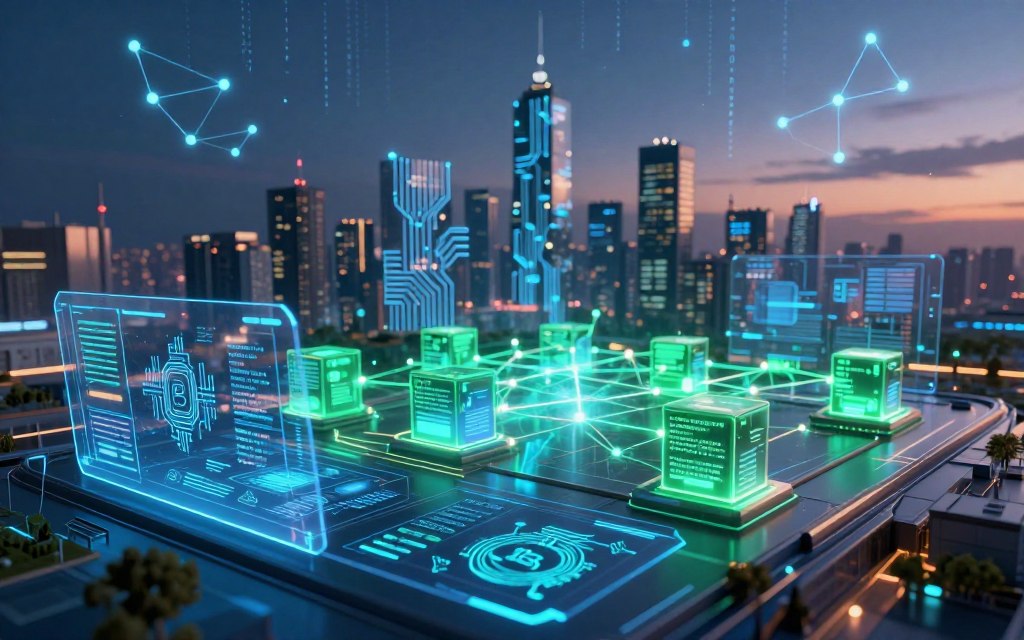
The digital currency world is changing fast. It’s moving beyond just being a way to exchange value. Now, artificial intelligence and blockchain technology are coming together.
This mix is creating a new kind of digital asset called AI cryptocurrencies. They’re not just tokens. They’re designed to power the next big thing in decentralised AI.
Blockchain’s digital ledger is key. It shows how an AI model works and its data history. This is important. It helps prove the data’s origin, making AI’s advice more trustworthy.
This team-up is strong. Blockchain makes AI work safer and more open. AI, on the other hand, adds its smart predictions and analysis to the crypto world. They’re building secure data markets and distributed networks together.
This is a big deal for businesses and the digital world. The mix of AI’s smarts and blockchain’s security is opening up new possibilities. It’s changing what we can do.
Defining the Convergence: AI, Machine Learning, and Blockchain
First, let’s understand the basics of artificial intelligence, machine learning, and blockchain. These three are key to a new digital finance era. Knowing what each does is the first step to seeing their power together.
Artificial Intelligence: Beyond the Hype
Artificial Intelligence (AI) is about making computers do things humans do. This includes solving problems and making decisions. It’s more than just hype; it’s a tool for real progress.
The Spectrum of AI: From Narrow to General
AI isn’t all the same. Most of what we see today is Narrow or Weak AI. It’s made for specific tasks, like recognizing images or translating languages. The dream of General or Strong AI, with human-like smarts, is not yet here. But Narrow AI is making a big difference now.
Machine Learning: The Engine of Modern AI
Machine learning (ML) is a big part of AI. It lets algorithms learn from data, getting better over time. This is why machine learning blockchain systems are great for checking transaction data.
Related Posts:


Supervised, Unsupervised, and Reinforcement Learning
ML works in different ways, each for different tasks:
- Supervised Learning: The algorithm learns from labelled data. It’s good for predicting things, like stock prices.
- Unsupervised Learning: It finds patterns in unlabelled data. This is useful for spotting unusual patterns, like in transactions.
- Reinforcement Learning: It learns by trying things and getting rewards. This is great for complex tasks, like trading.
Blockchain: The Trustless Ledger
A blockchain is a digital ledger that’s shared and can’t be changed. It’s secure and transparent. This makes it perfect for machine learning blockchain projects, as it provides a reliable source of information.
Core Principles: Decentralisation, Immutability, and Transparency
Blockchain is special because of three key principles:
| Principle | Description | Key Benefit |
|---|---|---|
| Decentralisation | No single entity controls the network. Data is distributed across multiple nodes. | Eliminates single points of failure and censorship. |
| Immutability | Once recorded, data cannot be altered or deleted. Changes require network consensus. | Creates a permanent, tamper-proof audit trail. |
| Transparency | All transactions are visible to participants, often in a pseudonymous form. | Fosters auditability and trust in the system’s operations. |
These principles make blockchain a “trustless” system. When combined with AI’s power, they open up new possibilities for finance and more.
What is AI in Crypto: The Core Synergy
Imagine a system where machines learn from vast datasets and rely on a ledger that ensures data is real and unchanged. This is what AI in cryptocurrency offers. It combines artificial intelligence’s quick learning with blockchain’s solid data integrity. Together, they create a trustworthy and transparent data economy, moving beyond just hype.
The relationship is symbiotic. AI adds new intelligence to blockchain networks, while blockchain gives AI access to large volumes of verified data. This combination solves big challenges in both fields, making both technologies better over time.
Complementary Strengths: Data Analysis Meets Data Integrity
Artificial intelligence, mainly machine learning, is great at finding complex patterns in huge, messy datasets. It can process information at speeds and scales humans can’t. But, the quality of the data it learns from is key.
Blockchain’s core value shines here. As a distributed, immutable ledger, it provides a source of truth. Data recorded on-chain, from financial transactions to supply chain events, has a verifiable provenance. This means AI developers get access to high-quality, trustworthy training data.
Blockchain gives the foundational trust layer, ensuring the data powering AI decisions is reliable and tamper-proof. This tackles the “explainable AI” challenge, as one can audit the origin of the data used.
The Feedback Loop: Smarter Contracts and Smarter Models
The synergy creates a powerful, self-improving cycle. High-quality blockchain data trains more accurate and fair AI models. These intelligent models can then be used to optimise the blockchain’s operations, leading to more efficient networks and sophisticated applications.
How Blockchain Data Trains AI Models
On-chain data is a goldmine for machine learning. Transaction histories, wallet interactions, and smart contract executions form rich, time-stamped datasets. Because this data is immutable, it reduces risks of poisoning or manipulation during the training phase.
AI models can analyse this information to predict market trends, detect network congestion patterns, or identify standard user behaviours. The result is more robust models that understand the crypto ecosystem’s nuances. This process helps mitigate human bias and increases the transparency of how an AI reaches its conclusions.
How AI Optimises Blockchain Operations
Conversely, AI brings adaptive intelligence to blockchain infrastructure. One of the most significant applications is in evolving smart contracts AI capabilities. Traditionally, smart contracts execute predefined rules. With AI integration, they can become dynamic.
These smarter contracts can analyse real-world conditions or external data feeds before execution. For example, a decentralised insurance contract could use an AI model to assess claim validity based on weather data and historical patterns. This moves contracts from static automation to intelligent, context-aware agreements.
Beyond contracts, AI optimises blockchain operations by:
- Improving network consensus mechanisms for better energy efficiency.
- Enhancing security protocols through real-time anomaly detection.
- Managing decentralised storage and data sharding for optimal performance.
The integration of smart contracts AI logic is not an endpoint but a catalyst. It enables blockchains to become more responsive, efficient, and capable of handling complex, real-world business logic autonomously.
Core Technical Mechanisms: How They Integrate
The real magic of AI in crypto is in the technical details. It’s how smart algorithms and blockchain work together. This part looks at the key models that link these two.
Success comes from solving big engineering problems. These include data, computation, and trust.
On-Chain vs. Off-Chain AI Computation
Deciding where AI processing happens is key. Each choice has its own trade-offs.
- On-Chain Computation: AI runs on the blockchain. This ensures trust and transparency but is slow and expensive.
- Off-Chain Computation: AI uses powerful servers, with results posted on-chain. This is fast but less trustworthy.
The choice depends on what’s more important: speed or trust.
The Scalability Trilemma and AI
AI can help solve blockchain’s big problem. It can predict network congestion and improve transaction flow.
Projects like Bittensor show a new way. They use a network to train AI models, showing the power of decentralised AI.
Oracle Networks: Bridging AI and the Blockchain
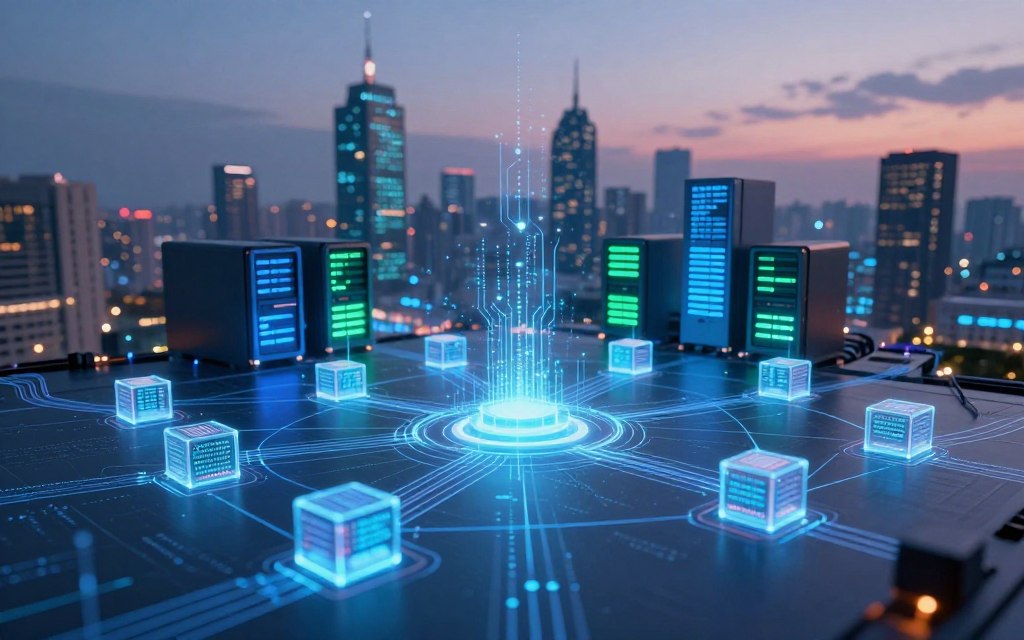
Blockchains can’t access outside data. Oracle networks bring in real-world info for smart contracts.
AI makes this role even more important.
Decentralised Oracles for Verifiable AI Inputs
AI oracles check and analyse data before it’s used. They can spot fake data and give a trust score.
This makes smart contracts more reliable. It turns oracles into active validators.
AI-Powered Smart Contracts
AI changes smart contracts in big ways. They go from simple rules to learning agreements.
From Static Logic to Adaptive Agreements
Imagine an insurance contract that uses AI. It looks at many data sources to decide on claims.
It can also learn from past claims. This makes it smarter over time. It’s a big step towards digital agreements that can adapt.
This is where decentralised AI meets blockchain’s power. It creates agreements that can change and improve on their own.
Revolutionising Trading and Market Analysis
AI is changing how we trade and analyse markets. It brings new intelligence and predictive power. This leads to better tools for data analysis, precise trading, and risk management.
This change is most seen in high-frequency and strategic trading. Here, speed and insight are key.
Algorithmic Trading and Predictive Analytics
Algorithmic trading AI is at the heart of crypto trading. It uses machine learning to find patterns in data. This is more than just following rules, as it adapts to new market conditions.
Sentiment Analysis of News and Social Media
AI can also understand unstructured data. It analyses news, forums, and social media like Twitter. This gives traders a deeper understanding of market mood, helping them predict changes.
Price Prediction Models and Their Limitations
Many systems use complex models to predict prices. They look at trading volumes and on-chain metrics. But, it’s important to know their limits.
Cryptocurrency markets are full of unpredictable factors. From regulatory changes to economic shifts, these can affect prices.
As one analyst said,
“AI can spot patterns, but it can’t predict everything. The models are powerful, but they’re not magic.”
It’s a mistake to rely only on these predictions. The real value is in using them to make better decisions, not to guarantee results.
Automated Portfolio Management and Robo-Advisors
AI-powered robo-advisors are changing portfolio management. They create a crypto portfolio based on your goals and risk tolerance.
Personalised Risk Assessment and Rebalancing
These services offer a personalised risk assessment. AI checks the portfolio’s risk and rebalances it if needed. This keeps the portfolio aligned with your goals, often at lower costs.
This approach helps investors avoid making emotional decisions. It sticks to a long-term strategy, even during market ups and downs.
Market Making and Liquidity Provision
AI is also changing how markets are made. On DEXs, it’s key to have efficient market making. AI algorithms optimise strategies by analysing order flow and price spreads.
These systems adjust prices to ensure tighter spreads and deeper order books. This makes markets more stable and efficient for everyone. For those providing liquidity, AI helps maximise returns while reducing risks.
In short, algorithmic trading AI is not just for elite traders. It’s making advanced financial analytics and automated trading accessible to more people.
Enhancing Security, Compliance, and Fraud Detection
Artificial intelligence is a game-changer for blockchain networks. It boosts their security and helps meet complex rules. This makes the environment safer for everyone.
Anomaly Detection in Transaction Networks
Blockchain’s openness means every transaction is recorded. But, checking this data for threats needs smart tools. Machine learning is perfect for this job.
AI models learn from past data to spot normal behaviour. Then, they watch live activity closely. They flag anything unusual, like hacked wallets or scams.
Identifying Illicit Activities and Money Laundering
AI is great at fighting financial crime. It spots complex money laundering schemes. These schemes use many wallets and exchanges.
AI links different addresses and tracks money flows. This helps find illegal activities. AI boosts blockchain security by giving investigators useful info.

AI-Driven Know Your Customer (KYC) and Anti-Money Laundering (AML)
For crypto businesses, following rules is hard. Old KYC and AML methods are slow and expensive. AI makes these processes faster and more accurate.
AI starts by checking identities. It looks at IDs, checks databases, and uses biometrics to prevent fake IDs.
Automated Identity Verification and Risk Scoring
Worldcoin uses biometrics like iris scanning for digital identities. After verifying, AI keeps checking user actions and transactions. It gives a risk score based on this.
Small, regular purchases are low risk. But, big, sudden transfers to risky places raise alarms. This automated risk scoring helps focus on high-risk areas.
Smart Contract Security Auditing
Smart contracts are key to decentralised systems. But, a bug can cause big losses. AI makes code audits faster and more thorough.
AI tools scan smart contract code. They learn from past exploits and known weaknesses. They predict possible attacks before deployment.
Vulnerability Prediction and Code Analysis
AI finds known bugs and predicts new ones. It simulates many scenarios to find logical flaws. This makes apps safer before they’re used.
AI-powered auditing catches problems early. It protects user funds and builds trust in blockchain security.
AI is essential for blockchain’s safety and compliance. It makes networks secure and follows global rules.
Powering Decentralised Finance (DeFi) and Autonomous Organisations (DAOs)
Artificial intelligence is changing how we think about finance and governance. In decentralised finance (DeFi) and DAOs, AI brings new levels of efficiency and smart decision-making. It makes systems more dynamic and transparent.
This mix makes finance and decision-making more flexible. It’s a big step from the old, strict blockchain rules. Now, we have systems that can learn and adapt quickly.
Dynamic Lending and Borrowing Protocols
Old DeFi lending is often too safe but not very efficient. AI-powered lending protocols change this by assessing risk in new ways. They offer loans that fit each person’s needs better.
AI looks at more data than before to judge someone’s creditworthiness. This makes lending more like traditional finance but without the need for trust.
AI-Calculated Collateralisation Ratios and Creditworthiness
AI can adjust how much collateral is needed in real-time. It considers:
- Asset volatility: It keeps up with market changes.
- Borrower history: It looks at past loan behaviour.
- Portfolio correlation: It checks the risk of the collateral.
This makes lending safer and more efficient. People with good credit can get better loans. And the system protects itself from bad times.
Optimising Yield Farming and Liquidity Strategies
Yield farming is complex, with many variables to watch. It involves using assets to earn rewards across different platforms.
AI is great at handling this complexity. It can:
- Find the best places to invest.
- Plan the best way to manage assets.
- Guess how things might turn out.
AI makes it easier for everyone to get the most from their investments. It’s a big help in managing risks and making smart choices.
AI-Driven DAO Governance
DAOs face big challenges in making decisions. They have to deal with long proposals and managing big funds. AI helps with this by providing better analysis and forecasts.
AI doesn’t make decisions itself. It helps the community make better choices by giving them useful information.
Proposal Analysis, Voting Trend Prediction, and Treasury Management
AI helps in many ways with DAO governance. It can understand long proposals and spot problems. It can also predict how votes might go.
AI can predict voting trends by looking at past data and what people are saying. This helps in making better proposals and understanding the community’s views.
AI is also key in managing funds. DAOs hold a lot of assets, and AI helps decide how to invest them. It suggests strategies and predicts risks. This brings professional management to decentralised groups.
The use of AI in DeFi and DAOs is a big step forward. It makes systems more adaptable and sophisticated. This change promises to make decentralised finance and governance better for everyone.
The Tangible Benefits and Value Proposition
Machine learning and blockchain together bring real benefits. They make processes automatic and financial tools available to everyone. This mix offers a strong value for developers, investors, and institutions. It brings measurable improvements and solves old problems, opening new digital economy paths.
Increased Efficiency and Automation
AI makes complex processes faster and smoother. It removes delays caused by manual steps. This change affects the whole crypto world.
AI-powered smart contracts can act on their own, based on market conditions. Checks that took days now take minutes. This change lets people focus on new ideas, not just routine tasks.
The table below shows how AI changes things in crypto:
| Process | Traditional Method | AI & Blockchain Enhanced Method |
|---|---|---|
| Trade Execution | Manual analysis, emotional decision-making, delayed order placement. | Algorithmic execution based on real-time data, 24/7 operation without fatigue. |
| Regulatory Compliance (KYC/AML) | Document-heavy, human-led review prone to backlog and inconsistency. | Automated document verification, pattern recognition for suspicious activity, continuous monitoring. |
| Portfolio Rebalancing | Infrequent, calendar-based adjustments often missing optimal market windows. | Dynamic, data-driven rebalancing triggered by predictive market signals. |
| Smart Contract Auditing | Manual code review, a time-intensive process that can miss novel exploits. | AI-powered static and dynamic analysis to identify vulnerabilities rapidly and comprehensively. |
Enhanced Accuracy and Reduced Human Bias
AI offers precision that humans can’t match. It looks at huge amounts of data, spotting patterns we can’t see. This leads to better market forecasts and asset values.
AI also reduces common human biases. While AI can inherit bias, the right data can fix this. It doesn’t get swayed by emotions like humans do. This is very useful in the fast-changing crypto markets.
“The promise of AI in finance isn’t to create infallible oracles, but to provide tools that augment human decision-making with a scale and consistency we cannot achieve alone. The goal is a symbiotic partnership where technology handles computational heavy lifting, freeing analysts for nuanced judgement.”
Superior Risk Management and Predictive Capabilities
Predictive analytics crypto shows AI’s real value. It forecasts outcomes by looking at past and current data. This is a game-changer for risk management.
AI can check if DeFi borrowers are trustworthy by looking at their transactions. It can also spot when there might be a liquidity problem. This proactive approach is a big step forward.
AI’s predictive power lets platforms offer better financial products. They can adjust risks and warn about smart contract problems. This makes financial tools safer and more reliable.
Democratisation of Advanced Financial Tools
AI and blockchain make financial tools available to everyone. What was once only for big players is now open to all. This includes advanced trading and portfolio management.
Platforms with AI offer custom investment plans and manage portfolios automatically. This makes it easier for more people to join the crypto world. It brings more inclusion and innovation by sharing powerful tools.
The mix of AI and blockchain offers many benefits. It makes things more efficient, accurate, and safe. It also makes financial tools available to everyone, shaping the future of finance.
Navigating the Challenges and Ethical Considerations
The mix of AI and blockchain is exciting but comes with big challenges. These include technical, ethical, and regulatory hurdles. For those working with AI tokens, knowing these challenges is as important as seeing the benefits.
The “Black Box” Problem: Transparency vs. Complexity
Advanced AI and machine learning models are like “black boxes.” Their inner workings are too complex, even for their creators. This lack of transparency is a big issue when combined with blockchain’s permanent ledger.
When an AI smart contract makes a wrong or biased decision, figuring out why is hard. This problem gets worse when biased data leads to unfair outcomes. Once these biases are recorded on the blockchain, they can’t be changed. This raises big ethical and accountability questions.
Data Privacy and Centralisation Risks
AI models need lots of data to work well. But blockchain networks struggle to keep this data private. The current privacy standards are not strong enough, leaving personal or proprietary data at risk.
Another risk is the return of centralisation. Even though blockchain is decentralised, the AI and oracle services it uses often are not. This creates a problem where one point can fail or control everything, undermining the crypto space’s decentralised goal.
Regulatory Uncertainty and Compliance Hurdles
Projects that combine AI and crypto face unclear regulations. Governments worldwide are figuring out how to handle AI and digital assets. This uncertainty makes it hard for companies to follow the rules and can slow down innovation.
For AI tokens, the questions are even more pressing. Are they utility tokens, securities, or something new? The lack of clear answers from places like the US Securities and Exchange Commission (SEC) makes it risky for developers and investors.
Potential for Market Manipulation and Systemic Risk
AI’s automation and predictive power open up new ways for market manipulation. AI trading bots could create fake price movements or liquidity problems, fast and at a large scale.
In DeFi, the risk is even higher. If AI models used by many protocols fail or are manipulated, it could cause a big crisis. This shows the need for careful and cautious use of these tools.
To fully integrate AI and blockchain, we need more than just tech innovation. We also need good governance, ethical frameworks, and clear regulations. The future of AI tokens depends on tackling these challenges directly.
Conclusion
The mix of artificial intelligence and blockchain is changing our digital world. It’s making data safer and smarter.
This blend is making trading better, security stronger, and DeFi more dynamic. It’s leading to a future where systems can make decisions on their own.
But, we face challenges like keeping things transparent, following rules, and protecting data. These are areas we need to work on.
For companies and developers, getting into this tech is key. Learning now helps them build better systems. The future internet will be smart and self-running, with DAO AI leading the way.
FAQ
What is the difference between an AI cryptocurrency and a traditional cryptocurrency like Bitcoin?
Traditional cryptocurrencies like Bitcoin are mainly used as a store of value or for trading. They use blockchain for security. AI cryptocurrencies, on the other hand, are made for AI services. They pay for AI tasks, reward data contributors, and manage AI networks like Bittensor.
How do artificial intelligence and blockchain technology actually work together?
They work well together. Blockchain keeps data safe and unchangeable. AI uses this data to learn and make decisions. This makes AI models better and blockchain operations more efficient.
Can AI computation happen directly on a blockchain?
It’s possible but not always practical. Running AI on blockchain can be slow and expensive. Instead, AI runs off-chain, and blockchain records transactions and payments.
How is AI used in cryptocurrency trading?
AI changes trading with smart systems that predict market trends. These systems use data like price history and news to make decisions. AI also helps with automated trading and making markets in DEXs.
Can AI improve security in the blockchain and crypto space?
Yes, AI is a strong protector. It spots fraud and hacking attempts. AI also checks identities and audits smart contracts for safety.
What role does AI play in Decentralised Finance (DeFi)?
AI makes DeFi smarter and more flexible. It helps with lending and finding the best investment strategies. This makes finance more accessible and efficient.
What are the main benefits of integrating AI with blockchain?
The main benefits are huge efficiency gains and better decision-making. AI helps manage risks and makes complex tasks easier. It also makes advanced tools available to everyone, not just big companies.
What are the biggest challenges or risks of AI in crypto?
Big challenges include the “black box” problem and data privacy. There’s also a risk of AI becoming too powerful. The rules for AI and crypto are unclear, and AI trading bots can manipulate markets.