

AI Agents That Send Follow-Up Texts and 3D Tours After a Call
In today’s fast-paced sales world, timing is key. The moments right after a good chat are a chance many miss.
Buyers today want quick, personal answers. Studies show quick follow-ups boost chances of a sale. But, doing this manually can slow things down.
Intelligent systems are changing the game. Tools like Lindy and SalesCloser.ai show how tech can handle this task well.
These tools are at the forefront of AI sales automation. They make sure no one is forgotten after a first contact. They turn prospect call follow-up into a key advantage.
Using advanced automated text messaging keeps sales teams moving. It lets them focus on important tasks. This keeps your brand in mind when it counts.
That topic also connects naturally to ai prospecting sales tools a from another useful angle.
Understanding the Modern Sales Follow-Up Challenge
In today’s fast-paced market, the moments right after a prospect call are key. They can turn into big wins or lost chances. Many sales teams find this phase tough, not realising its big impact on sales and revenue.
The Gap in Traditional Post-Call Processes
Old ways of following up often fail, leading to lost sales. Manual steps can cause many problems, letting leads slip away.
Common issues include:
Related Posts:



- Slow responses due to busy reps or time zones
- Team members not speaking the same language
- Missing chances when it’s not business hours
- Not acting fast enough on call insights
Studies show quick action is key. Companies that reach out within an hour are much more likely to win the lead. This is compared to those who wait just two hours.
Why Timeliness and Personalisation Matter
Today’s customers want fast, relevant help that shows they’re understood. This makes lead response time a key part of keeping customers happy.
Being quick isn’t enough. The quality of the interaction matters too. Good personalised customer engagement means:
- Referring back to what was discussed
- Offering solutions that match their needs
- Using the right tone
- Proposing the next steps based on the call
“The difference between good and great sales organisations often comes down to what happens in the first 60 minutes after initial contact.”
Combining speed with relevance is powerful. It makes prospects feel heard and valued. This boosts their willingness to move forward. The data backs this up, showing better sales and happier customers for those who get it right.
What Are AI Agents and How Do They Function?
Artificial intelligence has changed from simple chatbots to advanced assistants. These systems are changing how businesses handle sales and customer relationships.

Defining AI Agents in Sales Automation
AI agents in sales automation are smart systems that do tasks and make decisions on their own. They use rules and machine learning to improve over time. Unlike simple chatbots, they understand context and adapt their actions.
These agents act as virtual sales assistants. They handle routine tasks and keep a personal touch. They can understand natural language, know what customers want, and act without human help. This is great for follow-up communications and relationship nurturing after initial calls.
Key Technologies Powering These Systems
AI agents work well because of advanced technologies. These technologies make the experience feel both human and efficient.
Natural Language Processing for Text Generation
Natural Language Processing (NLP) is key for smart text generation in sales. It lets AI systems understand and respond to human language in a natural way.
Modern NLP systems can read emotions, urgency, and customer needs. This means they can personalise communication at scale. It makes automated conversations feel real and personal. The use of NLP in sales has changed how businesses keep in touch with customers.
Integration Capabilities with CRM Tools
Being able to integrate with CRM tools is vital for AI agents. This lets them access customer history and update records in real-time. They can also trigger follow-up actions based on call results.
Integration makes customer data flow smoothly between systems. This helps AI agents make better decisions based on full customer profiles, not just single interactions.
| Technology Component | Primary Function | Impact on Sales Process |
|---|---|---|
| Natural Language Processing | Understands and generates human-like text | Enables personalised follow-up messages |
| CRM Integration | Connects with customer databases | Provides context-aware interactions |
| Machine Learning Algorithms | Improves responses over time | Enhances conversion rates through learning |
| Decision Engines | Determines appropriate actions | Automates workflow triggers |
These technologies work together to make smart systems. They automate tasks and improve customer interactions. The mix of AI agent technology and strong integration is the future of sales automation, as explained in our guide to artificial intelligence in call centres.
When used right, these systems help sales teams, not replace them. They handle routine tasks, letting sales pros focus on complex deals and building relationships. This makes sales teams more efficient and effective.
AI Agents for Follow-Up Texts and 3D Tour Links After a Prospect Call
After a successful prospect call, the real work begins. Modern AI agents make this follow-up phase smooth and effective. They keep your offer in mind.
Automating Text Message Follow-Ups
Intelligent systems now handle automated SMS follow-up with great precision. They look at call transcripts in real-time. They find key points and what the prospect is interested in.
Crafting Personalised Messages Based on Call Data
AI agents pull out specific details from conversations. This includes preferred features, budget, and timeline questions. They then create messages that mention these points, making them personal at scale.
This method is more than just using names. It shows active listening and understanding of the prospect’s needs.
Optimal Timing and Frequency Strategies
Timing is key for follow-up success. AI systems figure out the best times to send messages.
- First message within 15 minutes of the call ending
- Second follow-up 24-48 hours later if no response
- Final message at 5-7 days for warm leads
This structured method keeps prospects engaged without being too much.
Incorporating 3D Tour Links in Communications
Visual elements boost follow-up success. 3D virtual tour marketing offers immersive experiences. It helps prospects see what you offer.
Selecting and Generating Relevant 3D Content
AI agents pick the right visual assets based on the conversation. If a prospect showed interest in certain features, the system focuses on those.
The tech can create custom tour paths. It highlights the features discussed, making the experience feel tailored for each prospect.
Enhancing Engagement with Visual Assets
Quality visual content increases response rates. Visual asset engagement shows that 3D tours lead to higher conversion rates than text-only follow-ups.
These immersive experiences help overcome objections. Prospects can see spaces and features, building confidence in their choices.
Combining personal messages with relevant visuals makes a strong follow-up strategy. It moves prospects smoothly through the sales funnel.
Benefits of Implementing AI-Driven Follow-Ups
Using AI for follow-ups changes how sales teams talk to prospects after they first meet. These smart systems bring big wins that help make more money and use resources better.
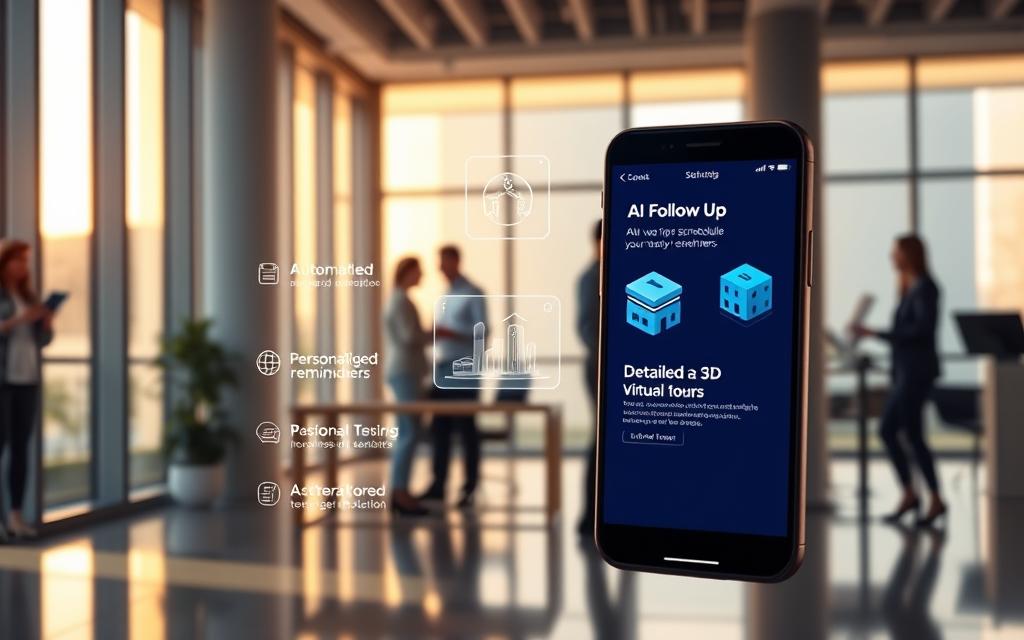
Increased Lead Conversion Rates
Quick and personal follow-ups really help turn leads into customers. AI makes sure every prospect gets the right message right away after a call.
Studies show companies with automated follow-ups get 30-60% more conversions than those that don’t. AI’s consistent and fast messages keep prospects engaged.
What makes this work include:
- Instant 3D tour links when interest is high
- Personalised messages based on the conversation
- Follow-ups at the right time, no matter the agent’s busy-ness
This smart way of optimising lead conversion makes sure every good prospect gets the right attention. This leads to more tour bookings and deals.
Time and Resource Savings for Sales Teams
AI takes care of the boring follow-up tasks, letting sales teams do more important work. This makes the whole team more efficient.
Sales teams say they save 40-50% of time on follow-up tasks. They can now focus on tough negotiations, building relationships, and growing accounts.
“Our sales team now spends 70% more time on actual selling thanks to AI follow-ups. The automation handles the routine, while our team adds the personal touch.”
There are more benefits than just saving time. Businesses can grow their sales without hiring more people. AI handles more messages easily, helping growth without extra costs.
More benefits for sales team productivity include:
- Less chance of data entry mistakes
- Easy tracking and analytics
- Smooth integration with CRM systems
This all-around approach to operational efficiency makes sales teams more flexible. They can quickly respond to market chances while keeping up with prospect engagement.
How to Integrate AI Agents into Your Sales Process
Integrating AI agents into your sales process needs careful planning. You must choose the right platform and set up effective practices for deployment.
Choosing the Right AI Agent Solution
Choosing the right AI platform is key to your automation strategy. Look for solutions like Lindy that are easy to set up without coding. These platforms work well with your existing systems.
Evaluating Features and Compatibility
Check how well each platform handles natural language and supports different channels. Make sure it works with your CRM and calendar. The tech should improve your workflow, not hinder it.
Choose platforms that can optimise your sales process fully. They should manage text chats and 3D tours smoothly.
Considering Scalability and Costs
Think about the total cost of using the platform, not just the setup fees. See if it can grow with your business. Solutions like SalesClover.ai show how they can adapt to your needs.
Best Practices for Deployment and Training
Effective deployment is more than just setting up the tech. It involves strategy and ongoing improvement.
Setting Up Initial Parameters and Rules
Set clear rules based on your sales process. Create strategies for different types of prospects. Decide when to send follow-up texts and 3D tour links.
Customise your messages to keep your brand’s voice while being personal. The setup phase is critical for your AI’s success.
Monitoring and Optimising Performance
Start with strong AI performance monitoring from the start. Track how well it converts leads, responds quickly, and engages prospects. Use this data to tweak the AI’s actions for better results.
Keep an eye on which messages get the best responses. Update your strategy based on actual results, not guesses. This way, your AI agent gets better with each use.
Potential Challenges and How to Overcome Them
AI agents bring many benefits for sales follow-ups. But, there are challenges to overcome. Companies must tackle these to ensure success and keep customer trust.
Addressing Data Privacy and Security Concerns
Data security is a big worry for businesses with customer info. Sales talks often share sensitive info that needs strong protection.
Modern AI tackles these worries with strong security. It uses end-to-end encryption for all data. Many also meet GDPR and HIPAA rules.
When picking an AI agent, check its security and data handling. Look for clear audit trails and consent systems. These keep your data safe and follow the law.

Keeping security up is key. Regular checks and training are essential. Our guide to AI agents in business integration challenges stresses this point.
Ensuring Message Relevance and Avoiding Automation Pitfalls
Generic messages are a big challenge. They can harm relationships by feeling impersonal.
To avoid this, use a smart strategy. Here are some tips for real, personal messages:
- Make content dynamic and reference the conversation
- Segment your audience for more tailored messages
- Use human agents when talks get complex
- Update AI training with human success stories
These steps help messages feel personal and engaging. The goal is to support your team, not replace them.
It’s important to keep an eye on how well your AI works. Check conversation stats and customer feedback. Adjust your AI when needed to avoid feeling too automated.
| Challenge | Potential Impact | Recommended Solution | Implementation Timeline |
|---|---|---|---|
| Data Security Compliance | Legal penalties, reputation damage | Choose certified platforms with encryption | 2-4 weeks for initial setup |
| Generic Communication | Reduced engagement, lost opportunities | Dynamic content and audience segmentation | Ongoing refinement process |
| Complex Query Handling | Frustrated customers, missed conversions | Programmed human handoff triggers | 1-2 weeks for rule configuration |
| System Integration | Operational disruptions, data silos | API-first platforms with existing integrations | 4-6 weeks for full implementation |
By being ready for these challenges and solving them, businesses can use AI well. The right mix of automation and human touch is key for success.
Conclusion
AI agents are changing sales by making follow-ups quick and accurate. Using AI for follow-ups means faster and more tailored responses. This helps in converting more leads.
A good sales plan includes using these AI tools. It saves time and money. The future of AI in sales looks bright, making teams more effective.
It’s not about replacing people with AI. It’s about working together to do better. Using AI helps businesses stay ahead by being quick and personal.
FAQ
What is an AI agent in the context of sales follow-up?
An AI agent in sales follow-up is a smart system. It uses tech like Natural Language Processing (NLP) and works with CRM platforms like Salesforce or HubSpot. Unlike simple chatbots, these agents get the conversation, personalise messages, and send tailored messages or 3D tour links.
How do AI agents ensure timely follow-up after a sales call?
AI agents work right after a call ends, without any delay. They look at the call data, write custom messages, and send them out fast. This keeps prospects engaged, which is key.
Can AI agents integrate with existing CRM systems?
Yes, advanced AI agents easily connect with popular CRM systems like Salesforce, HubSpot, and others. This lets them log call data, see client history, and start follow-up actions. It makes the workflow better and more personal.
What role does personalisation play in AI-driven follow-ups?
Personalisation is key in AI-driven follow-ups. It makes prospects feel valued and boosts chances of conversion. AI agents use call insights to make messages relevant and engaging.
How do AI agents handle data privacy and security?
A> Good AI agents follow rules like GDPR. They use data encryption, secure API connections, and handle consent well. It’s important to pick solutions that keep client data safe and are open about how they handle it.
What are the measurable benefits of using AI for follow-ups?
Using AI for follow-ups can really help. It leads to more leads being converted because of timely, personal contact. Sales teams also save a lot of time and effort, as AI handles the routine tasks. This lets humans focus on more complex tasks.
How can businesses avoid generic or robotic automation with AI agents?
To keep things interesting, use AI with strong NLP, dynamic content, and audience segmentation. Also, set up rules for when to hand over to humans for complex talks. This keeps the customer experience natural and positive.
What should I consider when choosing an AI agent solution?
Look at the NLP quality, if it fits with your tech (like CRM and calendar tools), if it scales, and if it supports different channels (like SMS or email). Also, think about the total cost. This helps make sure the AI fits your sales process and goals.
Can AI agents send 3D tour links, and how are they selected?
Yes, AI agents can send 3D tour links. They pick the right visual assets based on what the prospect showed interest in during the call. This makes the prospect more engaged and helps them see what you’re selling, moving them through the sales process faster.
Is ongoing monitoring required after deploying an AI agent?
Yes, you should keep an eye on it and make changes as needed. Use data to tweak message timing, content, and when to hand over to humans. This keeps the AI working well and adapts to changes in customer behaviour and sales trends.